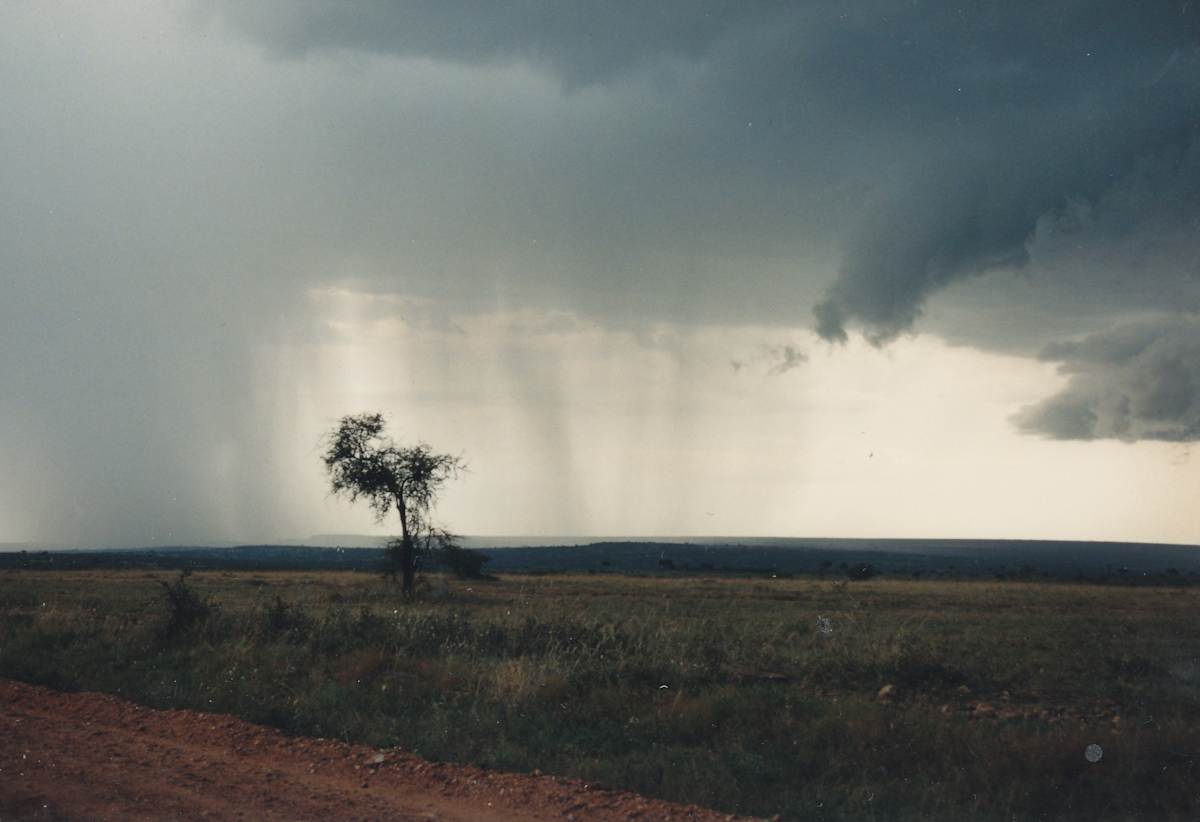
Scattered through the book(s) are assorted photos, callout boxes, letters or emails, Swahili proverbs and malapropisms. They are there—partly because the book is long, to give the reader a break, and partly because the book partly follows the designs of Lonely Planet Guide and Unravelling the Code.
I am told that interruptions to the flow of text are a real no-no in literature, as it spoils the “reader trance”. I agree these are more effective in reference books such as the Guide – but there is a time for everything.
The photographs are largely my own, from slides and film I took in 1994-96. In a few cases I have borrowed uncopyrighted photos from travel sites, with attribution. The picture of the Mating Mound is AI-generated.
The boxes are mostly verbatim from articles in Nairobi’s The Standard, from April 1994. They add information to the text. For example, when Jack passes a religious group in Kawangware, we find it is led by the Prophetess, a MP who believes a graveyard near the summit of Mount Kenya is the work of devil worshippers. Or—when Jack is concerned that he might not have selected the right partner by marrying young, we find out from a Letter to the Editor that this may lead to the loss of his private parts.
There are also three boxes explaining what Jack’s job actually is. These show a little of what Jack is actually presenting to officials during his global journey.
Swahili proverbs are part of Kenyan culture and are visible everywhere on kanga cloth. Many show considerable wisdom.
The correspondence is there to provide alternative viewpoints to Jack’s rather monolithic world-view. As time passes, the letters move from handwriting and faxes to emails, which are just being introduced in 2004.